Chapter 01
Encountering another way of learning
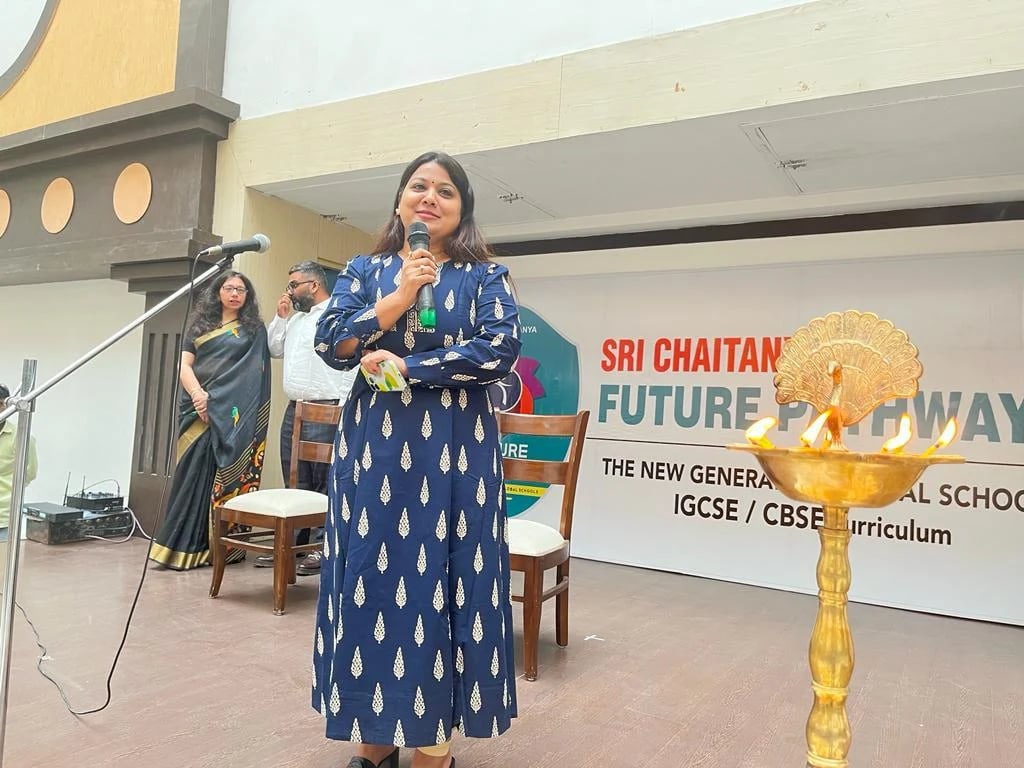

A little over two decades ago, she was pursuing her graduation and Company Secretary studies simultaneously. Having completed her degree, she found herself unable to complete the CS examinations, not from lack of effort, but from an inability to retain what she had studied.
Then her father took her to a camp offering yoga and meditation, hoping it would help her concentrate and study more effectively.
Her master at the camp asked her a simple question: could she remember any lesson from her graduation, completed just a month before? She could not recall a single one.
He then asked if she remembered a nursery rhyme.
Something unexpected happened. As she reached for those lost university lessons, a melody drifted into her mind. She found herself humming a rhyme she had not thought about since she was four years old. Every lyric, every rhythm, perfectly intact.
“That was her epiphany.”
She asked herself: how can the human brain completely discard high-level academic content within days, yet flawlessly preserve a simple childhood rhyme for decades?
That single question altered the course of her life. It drove her to pursue an MSc in Psychology and immerse herself in the study of neuroscience to understand how the brain actually learns, retains, and masters information.
What she discovered was this: conventional education was forcing students into passive, rote learning, a system designed for temporary compliance, not permanent competence. The nursery rhyme endured because it was anchored in rhythm, emotion, and pattern, the exact language the brain naturally speaks.
“What began as a personal discovery became a lifelong mission.”
Her mission was to understand the wisdom embedded in India’s ancient educational traditions, translate it through the lens of contemporary science, and bring meaningful learning practices into the classrooms of today.
She stands before us not merely as an educator, but as someone dedicated to reshaping how we understand learning itself. We cannot continue to teach against the brain.
Whether the subject is mathematics, language, music, or dance, a teacher is not simply delivering a syllabus. They are wiring neural pathways. When arts, logic, and human skills are integrated into learning, it replicates the exact mechanism that makes knowledge stick, not for an examination, but for a lifetime.
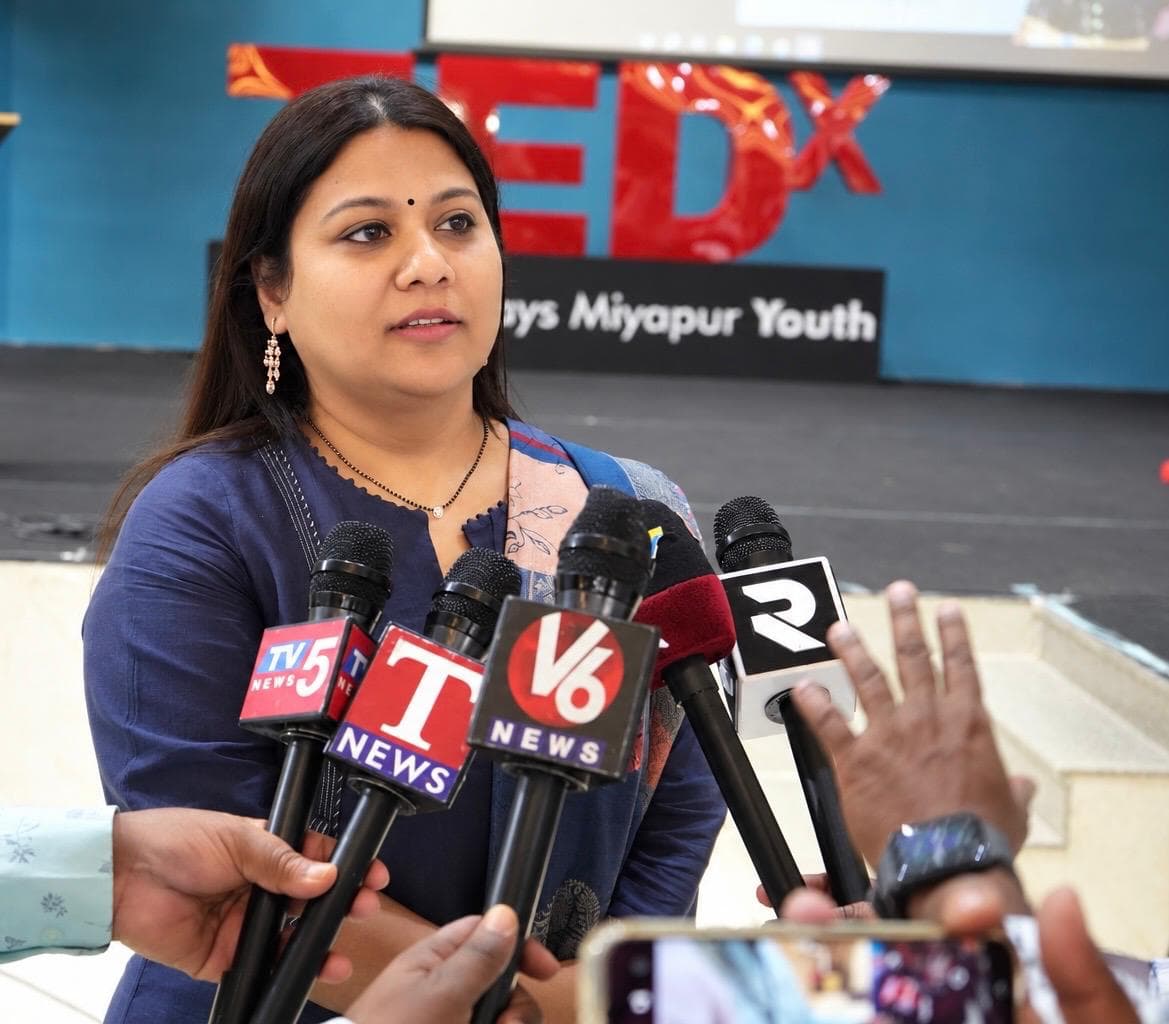
Her journey began at Rishi Gurukulam and grew through study camps, a children's club, and school leadership. Each experience brought new questions about how children learn.
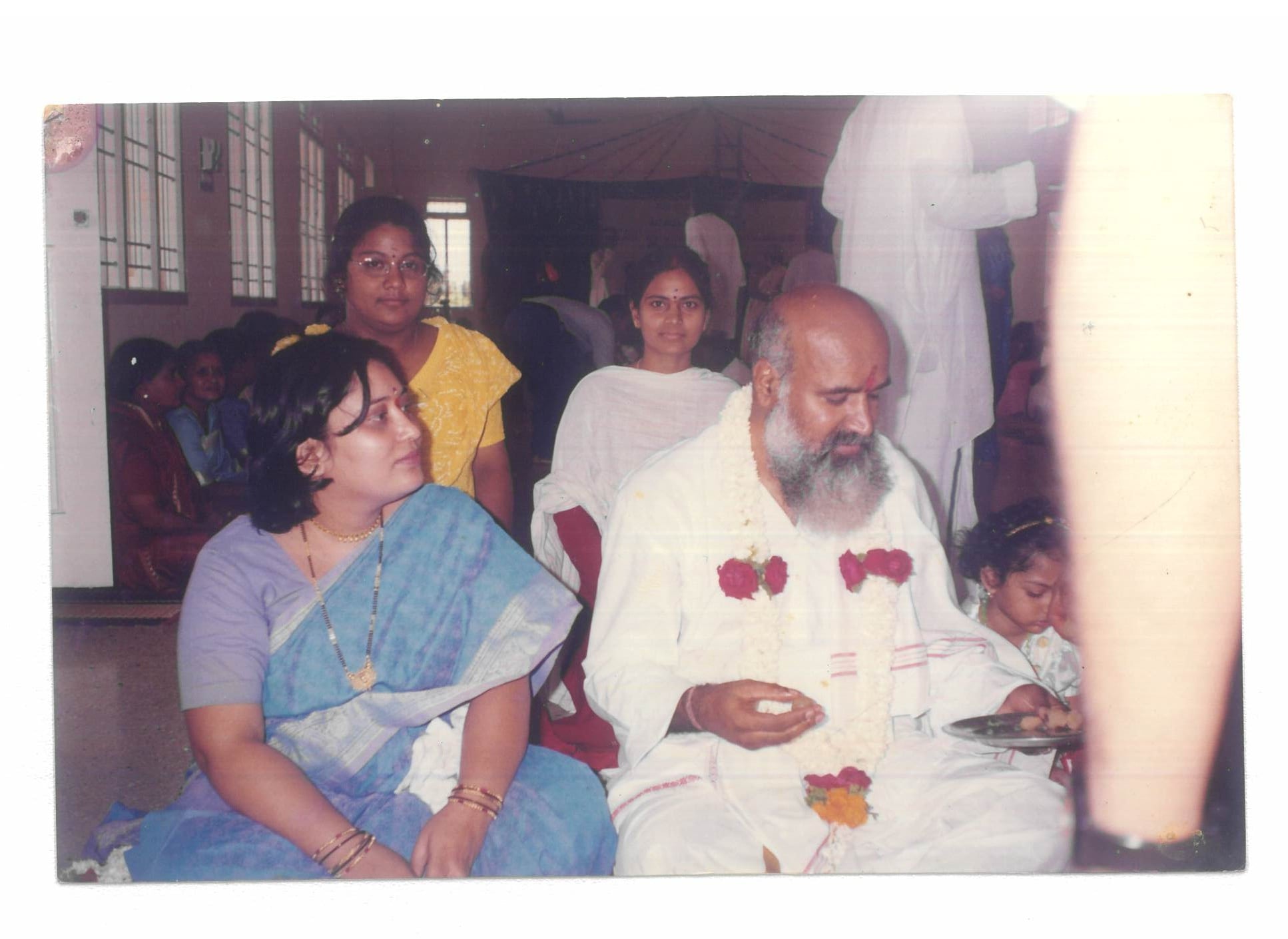
Pushpa Valli's first professional role was Programme Manager at Rishi Gurukulam, a CBSE residential school rooted in ancient Indian learning traditions. Between 2002 and 2005, she encountered Gurukul practices as part of everyday education: voice-based learning, rhythm, peer teaching, and natural memory techniques.
What Pushpa Valli observed here was striking: students were able to master subjects at a significantly faster rate than in conventional schools. The methods were not complicated; they were simply aligned with how the brain naturally learns. This observation became the seed of everything she would go on to build.
This experience became the starting point for a continuing enquiry into how children understand, remember, and apply what they learn. Her later study of child psychology, cognitive science, educational neuroscience, and neuroplasticity grew alongside that practical interest.
Chapter 1 of 5: Encountering another way of learning
Chapter 01 · 2002 to 2005
Pushpa Valli's first professional role was Programme Manager at Rishi Gurukulam, a CBSE residential school rooted in ancient Indian learning traditions. Between 2002 and 2005, she encountered Gurukul practices as part of everyday education: voice-based learning, rhythm, peer teaching, and natural memory techniques.
What Pushpa Valli observed here was striking: students were able to master subjects at a significantly faster rate than in conventional schools. The methods were not complicated; they were simply aligned with how the brain naturally learns. This observation became the seed of everything she would go on to build.
This experience became the starting point for a continuing enquiry into how children understand, remember, and apply what they learn. Her later study of child psychology, cognitive science, educational neuroscience, and neuroplasticity grew alongside that practical interest.
The question that emerged at Rishi Gurukulam was not simply how to teach more material, but what conditions make learning easier and more joyful for a child. It became the thread connecting the next stages of her work.
Chapter 02 · 2002 to 2007
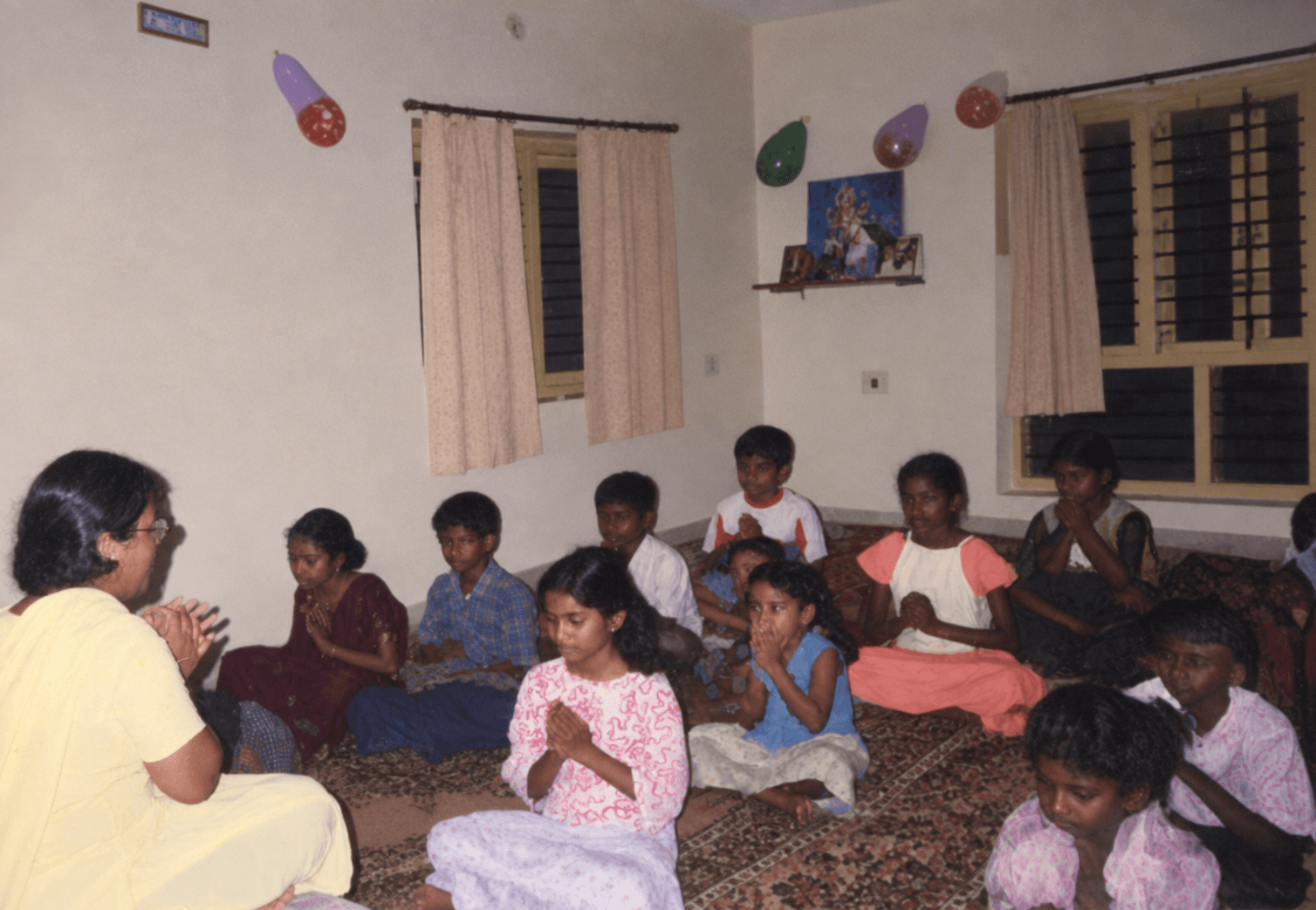
Alongside her role at Rishi Gurukulam, Pushpa Valli conducted residential study camps through RSVK, Rishi Samskrti Vidya Kendra, from 2002 to 2007. Each programme lasted between 21 and 41 days, giving her sustained, direct experience with students beyond a conventional lesson timetable.
Students arrived with a subject of their choice. The camps used focused study and techniques rooted in ancient Indian memory methods. In her account of this period, students were able to work through their chosen subject within the residential programme, rather than spread that work across a full academic year.
Thousands of students attended across the years she conducted the camps. Working with them helped her see differences in how children approached a subject, where they needed support, and how they responded to a different way of learning. Student testimonials from these camps are available on request.
The camps moved her enquiry from observation to direct practice: she could work with learners over several weeks and see their responses to the methods.
Chapter 03 · 2005 to 2007
In 2005, she founded Prapoorna Children’s Club, an after-school activity centre that became the first institutional expression of her learning philosophy.
Children attended for two hours each evening. The first 45 minutes were devoted to chanting, yoga, and meditation. The remaining time was spent on their school subjects. Children who practiced these ancient techniques showed noticeably higher cognitive engagement when they turned to their academic work, retaining information faster, focusing more easily, and approaching their studies with less anxiety.
This experience led her to a key insight: if children showed this level of improvement in just one to two hours a day, what would happen if these same principles were integrated into the full school curriculum? That question led her to the next phase.
Chapter 04 · 2007 to 2009
In 2007, Pushpa Valli joined DRS International, one of the oldest IB schools, as Centre Head. She wanted to understand how the principles she had explored in camps and the children's club could be incorporated into a mainstream school curriculum.
Her work introduced her to internationally recognised curriculum frameworks, particularly the IB Primary Years and Middle Years Programmes. It gave her a closer view of how a school connects its educational aims with classroom learning and the work expected of teachers.
She led academic administration, guided teachers in meeting IB requirements, and managed parent and student relations.
Most importantly, she gained a clear understanding of how global education frameworks are structured, and where the integration of brain-compatible learning methods was both possible and needed.
Chapter 05 · 2009 to Present
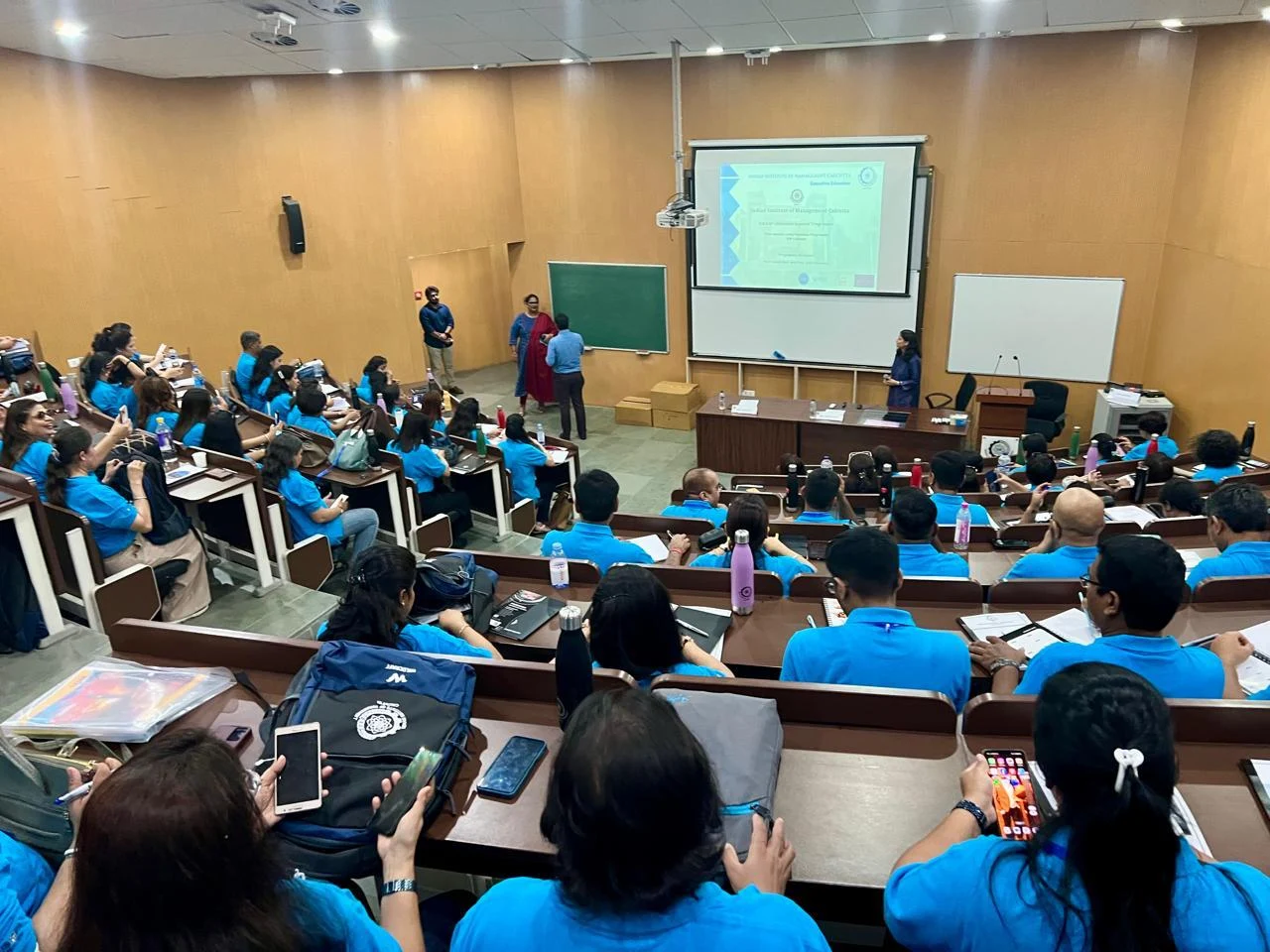
Pushpa Valli joined Sri Chaitanya Educational Institutions in 2009. She progressed from Academic Coordinator to Academic Manager, overseeing more than 60 campuses across four states, and later to Chief of Academics, K5 & K12 FPW. She now serves as Chief of Academics, Consultant.
The school network provided her with a unique platform to translate educational vision into classroom practice through curriculum development, teacher training, and learning-system design. During this period, she formally developed and implemented the Mavericks Learning Approach, an exclusive classroom implementation process created for Sri Chaitanya. It functions as the classroom-level expression of Prapoorna Neurovidya, the parent educational ecosystem, translating its philosophy and principles into practical teaching and learning experiences.
Her work on Mavericks connected years of direct experience with children to the task of preparing lessons and supporting teachers and academic teams across campuses. The emphasis moved from an individual programme towards practices that teachers could use within the school day.
She also designed and organised four world record events. The 2024 record involved more than 10,000 students across 20 states and received recognition from the World Book of Records, London.
This stage brought together the recurring strands of her journey: observing children, testing ideas through practice, designing curriculum, and preparing educators. Her continuing aim is to make learning with understanding, confidence, and joy accessible within everyday education.
What began in a Gurukul has reached the global stage.
What was dismissed as tradition has been validated by science.
What started with one question has become one woman’s mission.
To restore India’s greatest teaching legacy to every child who deserves it.
Proving that India’s oldest wisdom is the world’s greatest educational science.
Journey
Continues...
Her studies in psychology, child development, and education complement years of work with children and teachers.

